Showing posts with label News. Show all posts

Samsung announces multi-window feature Android 4.1 Premium Suite for Galaxy Note

Samsung have announced the Premium Suite upgrade for the original Galaxy Note N7000, the same upgrade made available to the Galaxy S3 smartphone.

Galaxy Note N7000 with  Android 4.1 Premium Suite

Like the set for the Galaxy S3, the Galaxy Note (N7000)'s update features Android 4.1.2 (Jelly Bean) and also Project Butter and Google Now. In addition, the software includes a number of new features and enhancements.

A Multi Window feature lets you view and perform multiple tasks on the same screen. A Popup Note helps you write down information while on a call, while a Popup Video and a Popup Browser allow you to catch a video or surf the Web while doing something else.

Features of Premium Suite Upgrade
  
Multi Window
Do multiple tasks on the same screen at the same time with no screen transitions.

Popup Note / Video / Browser
Popup Note, which allows users to instantly Conveniently write down directions, phone numbers, and other information while on a call. Popup Note will intuitively open when you pull out S Pen or double tap the screen. Popup Video and Browser allow users to watch video or browse the web while per forming other tasks

Photo Note / Photo Frame
Treasure your memories with handwritten notes on the front or back of your photos

Easy Clip
Crop an image from any screen to save or share easily. And, just draw a line to select text. You can easily capture the instant inspiration.

Paper Artist
Provides an emotional & aesthetic photo editing experience. Choose from various picture editing effects.

Handwriting on S Planner/ Email
Send handwritten notes via Email or handwrite memos to yourself in S Planner. Like a post card, you can send your emotional feeling now via Email with handwritten notes. Like your paper planner, you can write down your tasks in a more personal and intuitive way.

Enhanced S Note
More amusing effects & new templates were added. Use Sketch effect for various photo effect and image filters with Color Picker, you can pick any color you want directly from any images and draw with it

Source

Google and Motorola challenging Apple and Samsung with the new ' X Phone '

engineers at Motorola Mobility which was purchased by Google are working on a handset codenamed "X-phone", aimed at grabbing market share from Apple Inc and Samsung Electronics Co Ltd, the Wall Street Journal said, citing people familiar with the matter.


Google acquired Motorola in May for $12.5 billion to bolster its patent portfolio as its Android mobile operating system competes with rivals such as Apple and Samsung.
a media report said Friday. Google has a team of engineers at Motorola developing the new device, which is expected to be introduced sometime next year, The Wall Street Journal said, citing unnamed sources. Shares of Google Inc were down nearly 1% in afternoon trades. Apple was down as well, off 1.2%.

Motorola plans to enhance the X Phone with its recent acquisition of Viewdle, an imaging and gesture-recognition software developer. The new handset is due out sometime next year, the business daily said, citing a person familiar with the plans.

The previously undisclosed development effort is a key facet of Google's strategy for boosting the minuscule market position of the cellphone pioneer, based partly on bolstering quality while reducing the quantity of Motorola products.

Motorola is primarily working on two fronts: devices that will be sold by carrier partner Verizon Wireless, such as the "Droid" line of smartphones, and the X phone, these people said. Motorola is also expected to work on an "X" tablet after the phone, the people added.

Nokia take the rights to customize Windows Phone 7

Nokia has confirmed its unique relationship and partnership with Microsoft is even more closer than that of its rivals.
Talk about a change of mindset – it looks like Microsoft are taking back what they said about not allowing manufacturers to customize Windows Phone 7.


Microsoft originally didn’t want their operating system to be like Android – where consumers faced update delays just because manufacturers decided to throw on their own UI or skin over the stock operating system but now it seems that things have changed. Nokia has just confirmed that they will be allowed to customize the Windows Phone 7 operating system any way they like. But they have mentioned that the customizations will be kept to a minimum and won’t affect the update process when Microsoft releases updates for the operating system.  It hasn’t been made known if Microsoft will now let other manufacturers play a role with WP7 customization, but if so, we’re probably going to see a very different operating system when Nokia makes their WP7 phones. This Nokia-Microsoft deal is starting to get very interesting. What do you think of a Nokia-customized WP7 device?

Source

Microsoft Security Release ISO Image September 2010

This DVD5 ISO image file contains the security updates for Windows released on Windows Update on September 14th, 2010. The image does not contain security updates for other Microsoft products.

 This DVD5 ISO image is intended for administrators that need to download multiple individual language versions of each security update and that do not use an automated solution such as Windows Server Update Services (WSUS). You can use this ISO image to download multiple updates in all languages at the same time.
Important:   Be sure to check the individual security bulletins at http://www.microsoft.com/technet/security prior to deployment of these updates to ensure that the files have not been updated at a later date.


This DVD5 image contains the following updates:
KB2347290 / (MS10-061)
  • Windows XP - 24 languages
  • Windows XP x64 Edition - 2 languages
  • Windows Server 2003 - 18 languages
  • Windows Server 2003 x64 Edition - 11 languages
  • Windows Server 2003 for Itanium-based Systems - 4 languages
  • Windows Vista - 36 languages
  • Windows Vista for x64-based Systems - 36 languages
  • Windows Server 2008 - 19 languages
  • Windows Server 2008 x64 Edition - 19 languages
  • Windows Server 2008 for Itanium-based Systems - 4 languages
  • Windows Server 2008 R2 x64 Edition - 19 languages
  • Windows Server 2008 R2 for Itanium-based Systems - 4 languages
  • Windows 7 - 36 languages
  • Windows 7 for x64-based Systems - 36 languages
  • Windows Embedded Standard 7 - 36 languages
  • Windows Embedded Standard 7 for x64-based Systems - 36 languages
KB975558 / (MS10-062)
  • Windows XP - 24 languages
  • Windows Server 2003 - 18 languages
  • Windows Server 2003 x64 Edition - 11 languages
  • Windows Vista - 36 languages
  • Windows Vista for x64-based Systems - 36 languages
  • Windows Server 2008 - 19 languages
  • Windows Server 2008 x64 Edition - 19 languages
KB981322 / (MS10-063)
  • Windows XP - 24 languages
  • Windows XP x64 Edition - 2 languages
  • Windows Server 2003 - 18 languages
  • Windows Server 2003 x64 Edition - 11 languages
  • Windows Server 2003 for Itanium-based Systems - 4 languages
  • Windows Vista - 36 languages
  • Windows Vista for x64-based Systems - 36 languages
  • Windows Server 2008 - 19 languages
  • Windows Server 2008 x64 Edition - 19 languages
  • Windows Server 2008 for Itanium-based Systems - 4 languages
KB2124261 / (MS10-065)
  • Windows XP - 24 languages
  • Windows XP x64 Edition - 2 languages
  • Windows Server 2003 - 18 languages
  • Windows Server 2003 x64 Edition - 11 languages
  • Windows Server 2003 for Itanium-based Systems - 4 languages
  • Windows Vista - 36 languages
  • Windows Vista for x64-based Systems - 36 languages
  • Windows Server 2008 - 19 languages
  • Windows Server 2008 x64 Edition - 19 languages
  • Windows Server 2008 for Itanium-based Systems - 4 languages
  • Windows Server 2008 R2 x64 Edition - 19 languages
  • Windows Server 2008 R2 for Itanium-based Systems - 4 languages
  • Windows 7 - 36 languages
  • Windows 7 for x64-based Systems - 36 languages
  • Windows Embedded Standard 7 - 36 languages
  • Windows Embedded Standard 7 for x64-based Systems - 36 languages
KB2271195 / (MS10-065)
  • Windows Server 2008 R2 x64 Edition - 19 languages
  • Windows Server 2008 R2 for Itanium-based Systems - 4 languages
  • Windows 7 - 36 languages
  • Windows 7 for x64-based Systems - 36 languages
KB2290570 / (MS10-065)
  • Windows XP - 24 languages
KB982802 / (MS10-066)
  • Windows XP - 24 languages
  • Windows XP x64 Edition - 2 languages
  • Windows Server 2003 - 18 languages
  • Windows Server 2003 x64 Edition - 11 languages
  • Windows Server 2003 for Itanium-based Systems - 4 languages
KB2259922 / (MS10-067)
  • Windows XP - 24 languages
  • Windows XP x64 Edition - 2 languages
  • Windows Server 2003 - 18 languages
  • Windows Server 2003 x64 Edition - 11 languages
  • Windows Server 2003 for Itanium-based Systems - 4 languages
KB981550 / (MS10-068)
  • Windows Server 2003 - 18 languages
  • Windows Server 2003 x64 Edition - 11 languages
  • Windows Server 2003 for Itanium-based Systems - 4 languages
  • Windows Vista - 36 languages
  • Windows Vista for x64-based Systems - 36 languages
  • Windows Server 2008 - 19 languages
  • Windows Server 2008 x64 Edition - 19 languages
  • Windows Server 2008 R2 x64 Edition - 19 languages
  • Windows 7 - 36 languages
  • Windows 7 for x64-based Systems - 36 languages
KB982000 / (MS10-068)
  • Windows XP - 24 languages
  • Windows XP x64 Edition - 2 languages
  • Windows Server 2003 - 18 languages
  • Windows Server 2003 x64 Edition - 11 languages
KB2121546 / (MS10-069)
  • Windows XP - 24 languages
  • Windows XP x64 Edition - 2 languages
  • Windows Server 2003 - 18 languages
  • Windows Server 2003 x64 Edition - 11 languages
  • Windows Server 2003 for Itanium-based Systems - 4 languages

Download ISO

    Intel unveils new technology for data transmission over the rays of light

    Intel announced recently achieved significant progress in its quest to use beams of light to transmit data instead of using electrons in computers.


    The company has developed a prototype of the study is the first of its kind in the world, which depends on the transfer of data scanned by laser technology combined.. The new technology allows data transfer speeds and longer distances to double what is used in copper cables today, and data transfer speeds of up to 50 Gigabit per second, which is equivalent to the possibility of transferring the entire movie with high accuracy in one second.
    And related computer components today with each other by cables copper or through the paths of copper on the board of electronic circuits, and this lead to a weak signal in data transmission over the metal, and that these cable lengths specified, and this consequently limits of the design computers, and forced the designers to develop computer components Kalmalj and Memory at specific locations close to each other, but the current research directed towards the substitution of such communications fiber optic light and extremely thin can transfer more data to distances much longer and lead to a radical change in the design of computers and change the engineering and design data centers in the future.

    Will have silicon technology optical applications in the computing industry, for example, with these high rates of data transfer you can imagine display three-dimensional size of the wall, and the possibility of video conferencing with very high accuracy, so you can interact with others like you in the same room, The components of future data centers will be spread throughout the building and connect with each other at high speeds rather than somehow squeeze in one place by copper cables with limited capacity to communicate.

    The model of silicon optical link at 50 Gb / s the outcome of research has continued for years in the field of silicon optical model consists of a transmitter and receiver chip.

    Consists of the chip from the sender of four emitters of the laser, each carrying a packet data transfer rate of 12.5 Gb / s, are then combined to generate a single package of the optical fiber at 50 Gb / s, on the opposite end there-receiving chip is thanks to the beams of light four draws each of them to circuit detection you convert the data back to electrical signals, and is a compilation of chips with the technology of low-cost, familiar in the semiconductor industry, and works Intel researchers to increase the speed of data transfer through the expansion rates of speed, as well as increase the number of lasers on the chip , so that future speeds up to 1 terabit / sec is a very high rate sufficient to transfer a complete copy of the contents of a laptop computer in one second.


    **

    Intel to Buy McAfee, Inc for $7.68 Billion in Cash


    Intel has just bought computer and software security company McAfee. McAfee, Inc. (NYSE: MFE) makes antivirus and computer security software. Their primary brand is McAfee VirusScan, but other brands include IntruShield, Entercept, and Foundstone.
    according to a release issued this morning. The all cash deal is worth $7.68 billion, or $48 per share. See the release below.
    The $48-a-share deal marks a change of direction as the giant chip maker now jumps into the security business. Intel said it will make Santa Clara, Calif.-based McAfee a wholly-owned unit, reporting into its software and services group.
    McAfee is one of the largest security technology companies in the world and saw $2 billion in revenue in 2009. Cyber security, whether it be on computers or mobile devices, is a lucrative business as internet use is on the rise. And McAfee also offers smartphone security software, through the recent acquisitions of Trust Digital and TenCube. Clearly, Intel wants a piece of the pie.  
    McAfee, which was founded in 1987 and has about 6,100 employees, posted double-digit annual growth and nearly 80% gross margins last year. The company sells a suite of software-related security solutions, including McAfee Total Protection, McAfee Antivirus and McAfee Internet Security.
    It's not hard to imagine that Intel will combine its capabilities and resources in the hardware development area with McAfee's extensive security know-how to produce new solutions that will possibly change the security landscape.
     Intel sees the acquisition almost immediately adding to its bottom line, saying it sees it being slightly accretive on a non-GAAP basis in the first year. On a GAAP basis, Intel said the deal will be slightly dilutive in the first year of operations and approximately flat in the second year.

    Mcafee
     
    Website: mcafee.com
    Location:Santa Clara, California, United States
    Founded: August 14, 1987
    Acquired: August 19, 2010 by Intel for $7.68B in Cash
    McAfee, Inc. (NYSE: MFE) makes antivirus and computer security software. Their primary brand is McAfee VirusScan, but other brands include IntruShield, Entercept, and Foundstone.


    Source

    Voice Actions service for the Android smartphones


    Google announced the new Voice Actions service for the Android smartphone.

    Our mobile phones have become modern-day Swiss Army knives. An Android phone is a handheld computer, a music player, a notepad, a GPS navigation unit and more, all rolled into one sleek device that fits in your pocket. Today’s phones do so many things for us that sometimes we don’t even think about how we do them.
    Even though our phones do all these new things, the most natural way of interacting with a phone remains what it always has been: speaking. And to that end, we’re pleased to introduce Voice Actions for Android. Voice Actions are a series of spoken commands that let you control your phone using your voice. Call businesses and contacts, send texts and email, listen to music, browse the web, and complete common tasks, all just by speaking into your phone.

    To use Voice Actions, tap the microphone button on the Google search box on your home screen, or press down for a few seconds on the physical search button on your phone to activate the “Speak Now” screen. Let Mike LeBeau, the lead engineer for Voice Actions.

    Speak any of these commands to perform a Voice Action on your phone:
    • send text to [contact] [message]
    • listen to [artist/song/album]
    • call [business]
    • call [contact]
    • send email to [contact] [message]
    • go to [website]
    • note to self [note]
    • navigate to [location/business name]
    • directions to [location/business name]
    • map of [location]
    And of course, you can still conduct a Google search using your voice.


    While we’re at it, we’re also releasing an updated version of the Google search widget for Android. When you type a local search query, like [italian restaurants] you’ll see suggested restaurants with addresses and ratings. Also, as you type queries, you can refine them further by tapping the pencil icon that appears to the right of search suggestions.

    Both Voice Actions and the new Google search widget require Android 2.2 (Froyo), and will be pre-installed with the new Droid 2 phone from Motorola and Verizon. Voice Actions are currently available for U.S. English speakers.

    If you have another phone with Android 2.2 (like the Nexus One, HTC Evo or the original Droid), you’ll need to download several app updates from Android Market to get all the latest goodness:
    • Voice Search (this app includes Voice Actions)
    • Google Search widget
    • music apps (e.g. Pandora, Last.fm, Rdio, mSpot)
    To get started fast, scan the QR codes for these apps below.

    We think Voice Actions help you get things done on your phone faster and easier. Give it a try, and let us know what you think!
    Source

    Chrome Beta 6: Simple, Speedy and Full of Add-Ons


    Google has beefed up the latest beta of its Chrome Web browser by simplifying its features, boosting page-load speed, and packing it tight with many useful add-ons to enhance your browsing experience. Chrome Beta 6 is now available to download.

    Speed Boosts
    Chrome boasts impressive speed boosts. Beta 6 hits a "15 percent speed improvement on the V8 benchmark, and a 15 percent improvement on the SunSpider benchmark, both of which measure JavaScript performance," according to the Chrome blog. Google says the browser also improved by 64 percent on Mozilla's Dromeao DOM Core Tests (click on the images for a closer look at the graphs).
    In its blog, Google doesn't claim to have the fastest browser on the market -- a hefty declaration that most other browser manufacturers make. When Opera 10.5 was released in March, it was supposedly the fastest browser available. But Apple said Safari 4 Beta owned that crown -- a claim that was later shot down by tests. Internet Explorer 9 -- often the slowest of the bunch -- beat everybody in HTML5 tests (Chrome scored a distant last). It's difficult to tell who is the fastest -- which would explain why some people have a slew of browsers downloaded onto their computers.

    New Features

    Chrome Beta 6 has a bunch of new features and improvements that are ready for download. Here's a choice few:
    • Autofill: Google is especially proud of its autofill feature. Chrome's autofill works the same as autofill does in any capable browser, saving names, addresses, phone numbers, credit card numbers and more for easy online shopping. In Google's nod to safety and privacy, Chrome won't save your information without asking first.
    • Sync: It's not just about syncing bookmarks anymore. The update to the sync feature includes preferences, themes, and Chrome extensions as well as your autofill data (excluding credit card numbers) through your Google Account. Your Chrome experience on any computer will be the same as it is at home.
    • Cosmetic Changes: What's an update without a facelift? Chrome has a streamlined upper toolbar that makes the Omnibox (the site address bar, which has search capabilities) "more approachable," and condenses options into a single menu.
    • Web Timing: If you don't believe Google's speed tests, you can now run diagnostics yourself. Google placed a Web Timing feature into Chrome that'll measure load time across browsers.
    Add-Ons and Safety
    Chrome has no shortage of browser add-ons, nor does it skimp on Web safety settings. NotebookReview.com listed the 15 best Chrome security extensions for the ultra-paranoid. The best-sounding ones are:
    • Web of Trust: Displays traffic signal warnings for every link on the Web. Green means safe, amber means suspicious, and red should be avoided.
    • Click & Clean: In case your Web history is less than, um, presentable, Click & Clean demolishes not only your browsing history, but it also deletes every cookie, web temporary file, local web artifact, Local Shared Object (cookies for Flash) and download history item. You could also use Chrome's Incognito feature.
    • View Thru: Shortened URLs can pose serious security issues -- View Thru creates mouseover blurbs that show where you might be headed beforehand.
    • Secure Profile: Clamps your Chrome down iron-tight with encryption and password protection.

    Gizmodo also has a list of the top 10 Chrome add-ons you should know about. My favorites:
    • Xmarks: Syncs your bookmarks not only on Chrome but across every browser by storing your information in the cloud.
    • AdBlock: Highly customizable ad-blocking extension that'll keep marketers off your computer.
    • IE Tab: Some sites (sadly and still) can only be viewed in Internet Explorer -- IE Tab opens the IE rendering engine within Chrome itself, so you never have to double-click on Microsoft's "E" icon again.
    • Sexy Undo Close Tab: This one is my favorite, as I'm always closing tabs and immediately regretting it. Sexy Undo Close Tab (which also has an awesome name) basically scours through your browsing history to find closed tabs and allows you to bring them back from the dead.
    (See also PC World's "Top 10 Chrome Browser Add-ons" for another selection.)

    Constant Updates


    Google has been pumping out Chrome updates faster than users can keep up -- and that's the point. In a blog post entitled "Release Early, Release Often," Google said that "running under ideal conditions, we will be looking to release a new stable version about once every six weeks, roughly twice as often as we do today." The idea is that since Google creates new features so quickly, it wants to make sure every user gets a stable and speedy copy of the browser as soon as possible. (Google promises users of the stable version of Chrome that these improvements will be available "soon.")
    Though these constant updates may instigate user headaches, it's a sign that Google aims to be the Web browser leader, blasting past its competition with the latest and greatest.

    Download

    Firefox 4.0 Beta 3

    The browser provides virus, popup and spyware protection in a simple, easy to use tabbed interface

    The Firefox project (formerly Firebird, which was formerly Phoenix) is a redesign of Mozilla's browser component, written using the XUL user interface language and designed to be cross-platform.

    Firefox is a small, fast and very easy to use browser that offers many advantages over other web browsers, such as the ability to block pop-up windows and the tabbed browsing.
    Here are some key features of "Firefox":


    · Comprehensive popup controls to keep unwanted advertising off your desktop;
    · A tab browsing mode that lets you open several pages in a single window, allowing you to load links in the background without leaving the page you're on;
    · Integrated search (powered by Google);
    · Industry leading accessibility with Find As You Type - find links and page text by simply typing;
    · Simplified privacy controls that let you cover your tracks more effectively;
    · A streamlined browser window that lets you see more of the page than any other browser while at the same time being more configurable;
    · A large variety of free downloadable extensions and themes that add specific functionality and visual changes to the browser.

    Requirements:

    · Pentium 233 MHz (Recommended: Pentium 500MHz or greater)
    · 64 MB RAM (Recommended: 128 MB RAM or greater)
    · 52 MB hard drive space

    What's New in This Release: [ read full changelog ]

    · Tabs are now on top by default on Windows and OSX - Linux will be changing when the theme has been modified to support the change.
    · You can turn any tab into an "App Tab" by right-clicking on it and selecting "Make into App Tab" from the context menu.
    · Web developers can animate content using CSS Transitions.
    · Responsiveness and scrolling improvements from the new retained layers layout system.
    · JavaScript speed improvements due to engine optimizations.
    · Changes to how XPCOM components are registered in order to help startup time and process separation.

    Download : Firefox 4.0 Beta 3

    Microsoft Security Release ISO Image August 2010

    Overview
    This DVD5 ISO image file contains the security updates for Windows released on Windows Update on August 10th, 2010. The image does not contain security updates for other Microsoft products. This DVD5 ISO image is intended for administrators that need to download multiple individual language versions of each security update and that do not use an automated solution such as Windows Server Update Services (WSUS). You can use this ISO image to download multiple updates in all languages at the same time.

    Important:   Be sure to check the individual security bulletins at http://www.microsoft.com/technet/security prior to deployment of these updates to ensure that the files have not been updated at a later date.

    This DVD5 image contains the following updates:

    KB2286198 / (MS10-046)
    • Windows XP - 24 languages
    • Windows XP x64 Edition - 2 languages
    • Windows Server 2003 - 18 languages
    • Windows Server 2003 x64 Edition - 11 languages
    • Windows Server 2003 for Itanium-based Systems - 4 languages
    • Windows Vista - 36 languages
    • Windows Vista for x64-based Systems - 36 languages
    • Windows Server 2008 - 19 languages
    • Windows Server 2008 x64 Edition - 19 languages
    • Windows Server 2008 for Itanium-based Systems - 4 languages
    • Windows Server 2008 R2 x64 Edition - 19 languages
    • Windows Server 2008 R2 for Itanium-based Systems - 4 languages
    • Windows 7 - 36 languages
    • Windows 7 for x64-based Systems - 36 languages
    • Windows Embedded Standard 7 - 36 languages
    • Windows Embedded Standard 7 for x64-based Systems - 36 languages
    KB981852 / (MS10-047)
    • Windows XP - 24 languages
    • Windows Vista - 36 languages
    • Windows Vista for x64-based Systems - 36 languages
    • Windows Server 2008 - 19 languages
    • Windows Server 2008 x64 Edition - 19 languages
    • Windows Server 2008 for Itanium-based Systems - 4 languages
    • Windows Server 2008 R2 x64 Edition - 19 languages
    • Windows Server 2008 R2 for Itanium-based Systems - 4 languages
    • Windows 7 - 36 languages
    • Windows 7 for x64-based Systems - 36 languages
    • Windows Embedded Standard 7 - 36 languages
    • Windows Embedded Standard 7 for x64-based Systems - 36 languages
    KB2160329 / (MS10-048)
    • Windows XP - 24 languages
    • Windows XP x64 Edition - 2 languages
    • Windows Server 2003 - 18 languages
    • Windows Server 2003 x64 Edition - 11 languages
    • Windows Server 2003 for Itanium-based Systems - 4 languages
    • Windows Vista - 36 languages
    • Windows Vista for x64-based Systems - 36 languages
    • Windows Server 2008 - 19 languages
    • Windows Server 2008 x64 Edition - 19 languages
    • Windows Server 2008 for Itanium-based Systems - 4 languages
    • Windows Server 2008 R2 x64 Edition - 19 languages
    • Windows Server 2008 R2 for Itanium-based Systems - 4 languages
    • Windows 7 - 36 languages
    • Windows 7 for x64-based Systems - 36 languages
    • Windows Embedded Standard 7 - 36 languages
    • Windows Embedded Standard 7 for x64-based Systems - 36 languages
    KB980436 / (MS10-049)
    • Windows XP - 24 languages
    • Windows XP x64 Edition - 2 languages
    • Windows Server 2003 - 18 languages
    • Windows Server 2003 x64 Edition - 11 languages
    • Windows Server 2003 for Itanium-based Systems - 4 languages
    • Windows Vista - 36 languages
    • Windows Vista for x64-based Systems - 36 languages
    • Windows Server 2008 - 19 languages
    • Windows Server 2008 x64 Edition - 19 languages
    • Windows Server 2008 for Itanium-based Systems - 4 languages
    • Windows Server 2008 R2 x64 Edition - 19 languages
    • Windows Server 2008 R2 for Itanium-based Systems - 4 languages
    • Windows 7 - 36 languages
    • Windows 7 for x64-based Systems - 36 languages
    • Windows Embedded Standard 7 - 36 languages
    • Windows Embedded Standard 7 for x64-based Systems - 36 languages
    KB981997 / (MS10-050)
    • Windows XP - 24 languages
    • Windows XP x64 Edition - 2 languages
    • Windows Vista - 36 languages
    • Windows Vista for x64-based Systems - 36 languages
    KB2079403 / (MS10-051)
    • Windows XP - 24 languages
    • Windows XP x64 Edition - 2 languages
    • Windows Server 2003 - 18 languages
    • Windows Server 2003 x64 Edition - 11 languages
    • Windows Server 2003 for Itanium-based Systems - 4 languages
    • Windows Vista - 36 languages
    • Windows Vista for x64-based Systems - 36 languages
    • Windows Server 2008 - 19 languages
    • Windows Server 2008 x64 Edition - 19 languages
    • Windows Server 2008 for Itanium-based Systems - 4 languages
    • Windows Server 2008 R2 x64 Edition - 19 languages
    • Windows Server 2008 R2 for Itanium-based Systems - 4 languages
    • Windows 7 - 36 languages
    • Windows 7 for x64-based Systems - 36 languages
    • Windows Embedded Standard 7 - 36 languages
    • Windows Embedded Standard 7 for x64-based Systems - 36 languages
    KB2115168 / (MS10-052)
    • Windows XP - 24 languages
    • Windows XP x64 Edition - 2 languages
    • Windows Server 2003 - 18 languages
    • Windows Server 2003 x64 Edition - 11 languages
    KB2183461 / (MS10-053)
    • Windows XP - 24 languages
    • Windows XP x64 Edition - 2 languages
    • Windows Server 2003 - 18 languages
    • Windows Server 2003 x64 Edition - 11 languages
    • Windows Server 2003 for Itanium-based Systems - 4 languages
    • Windows Vista - 36 languages
    • Windows Vista for x64-based Systems - 36 languages
    • Windows Server 2008 - 19 languages
    • Windows Server 2008 x64 Edition - 19 languages
    • Windows Server 2008 for Itanium-based Systems - 4 languages
    • Windows Server 2008 R2 x64 Edition - 19 languages
    • Windows Server 2008 R2 for Itanium-based Systems - 4 languages
    • Windows 7 - 36 languages
    • Windows 7 for x64-based Systems - 36 languages
    KB982214 / (MS10-054)
    • Windows XP - 24 languages
    • Windows XP x64 Edition - 2 languages
    • Windows Server 2003 - 18 languages
    • Windows Server 2003 x64 Edition - 11 languages
    • Windows Server 2003 for Itanium-based Systems - 4 languages
    • Windows Vista - 36 languages
    • Windows Vista for x64-based Systems - 36 languages
    • Windows Server 2008 - 19 languages
    • Windows Server 2008 x64 Edition - 19 languages
    • Windows Server 2008 for Itanium-based Systems - 4 languages
    • Windows Server 2008 R2 x64 Edition - 19 languages
    • Windows Server 2008 R2 for Itanium-based Systems - 4 languages
    • Windows 7 - 36 languages
    • Windows 7 for x64-based Systems - 36 languages
    • Windows Embedded Standard 7 - 36 languages
    • Windows Embedded Standard 7 for x64-based Systems - 36 languages
    KB982665 / (MS10-055)
    • Windows XP - 24 languages
    • Windows XP x64 Edition - 2 languages
    • Windows Vista - 36 languages
    • Windows Vista for x64-based Systems - 36 languages
    • Windows 7 - 36 languages
    • Windows 7 for x64-based Systems - 36 languages
    • Windows Embedded Standard 7 - 36 languages
    • Windows Embedded Standard 7 for x64-based Systems - 36 languages
    KB978886 / (MS10-058)
    • Windows Vista - 36 languages
    • Windows Vista for x64-based Systems - 36 languages
    • Windows Server 2008 - 19 languages
    • Windows Server 2008 x64 Edition - 19 languages
    • Windows Server 2008 for Itanium-based Systems - 4 languages
    • Windows Server 2008 R2 x64 Edition - 19 languages
    • Windows Server 2008 R2 for Itanium-based Systems - 4 languages
    • Windows 7 - 36 languages
    • Windows 7 for x64-based Systems - 36 languages
    • Windows Embedded Standard 7 - 36 languages
    • Windows Embedded Standard 7 for x64-based Systems - 36 languages
    KB982799 / (MS10-059)
    • Windows Vista - 36 languages
    • Windows Vista for x64-based Systems - 36 languages
    • Windows Server 2008 - 19 languages
    • Windows Server 2008 x64 Edition - 19 languages
    • Windows Server 2008 for Itanium-based Systems - 4 languages
    • Windows Server 2008 R2 x64 Edition - 19 languages
    • Windows Server 2008 R2 for Itanium-based Systems - 4 languages
    • Windows 7 - 36 languages
    • Windows 7 for x64-based Systems - 36 languages
    • Windows Embedded Standard 7 - 36 languages
    • Windows Embedded Standard 7 for x64-based Systems - 36 languages
    KB983582 / (MS10-060)
    • Windows XP - 24 languages
    • Windows XP x64 Edition - 2 languages
    • Windows Server 2003 - 18 languages
    • Windows Server 2003 x64 Edition - 11 languages
    KB983583 / (MS10-060)
    • Windows XP - 24 languages
    • Windows XP x64 Edition - 2 languages
    • Windows Server 2003 - 18 languages
    • Windows Server 2003 x64 Edition - 11 languages
    • Windows Server 2003 for Itanium-based Systems - 4 languages
    KB983587 / (MS10-060)
    • Windows Vista - 36 languages
    • Windows Vista for x64-based Systems - 36 languages
    • Windows Server 2008 for Itanium-based Systems - 4 languages
    KB983588 / (MS10-060)
    • Windows Vista - 36 languages
    • Windows Vista for x64-based Systems - 36 languages
    • Windows Server 2008 for Itanium-based Systems - 4 languages
    KB983589 / (MS10-060)
    • Windows Vista - 36 languages
    • Windows Vista for x64-based Systems - 36 languages
    • Windows Server 2008 for Itanium-based Systems - 4 languages
    KB983590 / (MS10-060)
    • Windows Server 2008 R2 for Itanium-based Systems - 4 languages
    • Windows 7 - 36 languages
    • Windows 7 for x64-based Systems - 36 languages

    Download : DVD1
    Download : DVD2

    Source

    Free Microsoft Security Tool Tackles Malware Targeting Windows .LNK 0-Day

    Microsoft has updated a free tool it is offering Windows users enabling them to identify and remove infections produced by a specific list of malware in order to tackle some malicious code samples that have become associated with exploits for a recently patched Windows Critical zero-day vulnerability.

    A new version of the Malicious Software Removal Tool is now available for download from the Redmond company.

    The malware tackled by the latest release of MSRT has already been used by attackers in the wild in exploits targeting the now notorious Windows .LNK security flaw.
    “Threats like Stuxnet, Vobfus, and Sality (…) have incorporated the use of the CVE-2010-2568 vulnerability fixed by the MS10-046 bulletin,” revealed Scott Wu, from the Microsoft Malware Protection Center.

    “It’s clear that an increasing number of malware families are incorporating this vulnerability. Today’s MSRT release represents another step Microsoft is taking to cleanse the ecosystem of this infection vector,” Wu added.

    The latest version of the Malicious Software Removal Tool has been released through Windows Update, but users can also get the tool as a standalone download. MSRT has always been available through the Microsoft Download Center, and the August 2010 update is no exception to this rule.

    “We highly encourage our readers to apply all security updates to protect themselves from this and other vulnerabilities,” Wu recommended. 


     At the start of August 2010, the Redmond company released an out-of-band patch resolving the .LNK vulnerability. Not only was the security flaw Critical in itself but it was also being actively exploited in the wild.

    “One of the threats using this vulnerability that we recently discussed is Sality. It is a virus (a.k.a file infector) and has the potential to infect many files on your computer, making the disinfection tricky and time consuming, since in many cases it must repair, not simply delete, the troubled files. Recall that MSRT is a “cleanup” tool. It does not provide Real-time protection,” Wu said.

    Microsoft also provided a list with the specific malware samples tackled by MSRT following the August 2010 update:

    Win32/StuxnetWin32/CplLnk Worm:Win32/Vobfus.gen!A Worm:Win32/Vobfus.gen!B Worm:Win32/Vobfus.gen!C Worm:Win32/Vobfus!dll Worm:Win32/Sality.AU Virus:Win32/Sality.AU TrojanDropper:Win32/Sality.AU 


    The Malicious Software Removal Tool is available for download here.

    Microsoft Security Essentials is available for download
    here.


    Source

    Microsoft Warns of Attacks Targeting the Windows Service Isolation Feature

    Microsoft has issued a Security Advisory designed to inform customers of the potential attacks targeting the Windows Service Isolation, a feature which is included into all supported Windows operating systems, including Windows 7 and Windows Server 2008 R2.

    According to the Redmond company, a problem has been identified in the manner in which the NetworkService token can be received and leveraged in association with RPC calls, via the Windows Telephony Application Programming Interfaces (TAPI) transaction facility.

    Microsoft insists that this issue does not require a security bulletin to be patched, and that customers can already access an update that will bulletproof their systems against attacks. 


    “Although this is not a vulnerability that requires a security update to be issued, an attacker could elevate from NetworkService to LocalSystem using the TAPI service, which runs as system,” Microsoft stated.

    “An attacker must already be running with elevated privileges to exploit this issue. This service isolation was implemented as a defense-in-depth measure only and does not constitute a security boundary,” the company explained.

    Evidently, customers running systems with Windows Telephony Application Programming Interfaces (TAPI) are most at risk from attacks attempting to exploit this flaw.

    In this regard, they should turn to Microsoft Security Advisory (2264072) in order to gain additional information about the threat, but also get details on mitigating factors and workarounds.

    At this point in time the non-security update for the Windows Telephony Application Programming Interfaces (TAPI) Vulnerability (CVE-2010-1886) is already available on the Microsoft Download Center.

    “This issue affects scenarios where untrusted code is being executed within a process owned by the NetworkService account,” Microsoft said.
    “In these scenarios, it is possible for an attacker to elevate from running processes as the NetworkService account to running processes as the LocalSystem account on a target server,” the company added.

    “An attacker who successfully elevated to running processes as the LocalSystem account could execute arbitrary code and take complete control of an affected system. An attacker could then install programs; view, change, or delete data; or create new accounts with full user rights,” the software giant said. 


    Source

    Google rumored to buy virtual currency start-up


    A report Monday on TechCrunch suggests that, complementing its purchase last week of social-app manufacturer Slide, Google has made another social-networking buy: a virtual currency software company called Jambool. The start-up manufactures a product called Social Gold, which lets other sites build virtual-currency infrastructures.
    A smaller purchase than Slide, TechCrunch put the price tag at about $70 million. Representatives from Jambool were not immediately available for comment.

    Jambool's Social Gold was one of a number of virtual-currency start-ups that rose in the time in between the launch of Facebook's developer platform and its unveiling of its own transaction system, Facebook Credits. With Facebook now expanding the Credits system and potentially snuffing out third-party virtual-currency providers--it's been gradually winning over the most powerful social-game manufacturers on its developer platform--many of those start-ups are undoubtedly hunting for exit strategies.
    Jambool's executive team had been openly critical of Facebook's e-commerce ambitions in the past.
    Google runs its own PayPal-like transaction platform, Google Checkout, and may have been looking for a virtual-currency system to complement it. The tech giant, in the midst of cobbling together a social-media arsenal that won't flop like several of its past social-media projectsthe biggest social-gaming company, and may or may not be working on a full-fledged gaming product of its own. have, is rumored to be fine-tuning that strategy toward social gaming, one of the biggest runaway successes to emerge on Facebook. It's invested a hefty amount in Zynga,

    Source

    The Verizon iPhone Rumor Mill Keeps Churning

    So you want an iPhone but you don't want to use AT&T as a service provider. It's an old story...almost as old as the iPhone itself. We've heard again and again that AT&T's exclusivity agreement with Apple was about to run out, but so far it hasn't. Well here's another rumor saying the same thing. Actually two rumors that mesh together pretty well.

    The Verizon iPhone Rumor Mill Keeps Churning


    First up, leaks from the hardware front. TechCrunch's Steve Cheney reports that Apple has ordered "millions of units of Qualcomm CDMA chipsets." Why is this significant? Because AT&T's network uses GSM, not CDMA, so presumably Apple is building iPhones for a network other than AT&T's. The leap to Verizon seems to be one of faith for Cheney, who says the Verizon iPhone will hit in January, but there are a lot of cellular providers around the world. How does Cheney know these chips are going into Verizon phones?
    [ Get news and reviews on tech toys in ITworld's personal tech newsletter]
    Well, luckily for him, we've got another data point to work with. This one comes from Electronista who reports on an AT&T SEC filing. The filing, Electronista points out, devotes "a significant section of its warnings to the risks that occur when 'exclusivity arrangements end' and tried to minimize the potential effect." The filing doesn't single out the iPhone but let's face it, their deal with Apple is the only really significant exclusivity arrangement AT&T has. (You can read the whole SEC Filing here.)
    So putting the pieces together: Apple is building a CDMA device. AT&T is downplaying the loss of an unspecified exclusivity deal, implying the iPhone is going to be available on another carrier here in the U.S. Since Sprint and Verizon both use CDMA we still can't be sure which of the two carriers the new device is headed for (maybe both?) but given the relative size of the two it's a safe bet that Apple would be most interested in partnering with Verizon.
    So why is Apple severing its exclusive ties with AT&T now? If I had to speculate, I'd say Android is the main reason. We keep seeing huge numbers posted for Android devices (the most recent being that 200,000 Android devices/day are being activated). Can Apple afford to restrict itself to one carrier in the face of dozens of Android phones across several carriers, including AT&T? Sooner or later Android is going to hit enough of a critical mass that app developers are going to start switching teams, and without the App Store much of the magic of the iPhone vanishes.
    We've heard this rumor a lot of times and so far nothing has come of it. Let's hope this time out things are different.

    Source

    Expert: Apple is 10 years behind Microsoft in handling vulnerabilities and security issues

    Attacks on Mac OS X will increase, as the threat landscape will shift away from Windows and focus on platforms that have a smaller market share, believes one of the top security experts from AVAST Software, Ondrej Vlcek CTO AVAST Software.
    “I think we will be seeing more and more attacks towards Mac. Of course, it’s still a minor platform in terms of market share, currently estimated to be between 6% and 7%, compared to something like 92% or 93% for Windows. For attackers it’s much easier to focus on 90+%, but that’s changing; the market share is growing all the time,” Vlcek said.
    More importantly, Vlcek noted while speaking to Softpedia, that Apple has some issues in the way it deals with the security of Mac OS X. Essentially, AVAST’s CTO revealed that Apple is now where Microsoft used to be a decade ago in terms of how the Cupertino-based company tackles vulnerabilities.
    “And also as the platform is getting more popular it’s quite evident that there are a lot problems in the security of the Mac OS in general. What I mean is that Apple’s approach towards security vulnerabilities is not very fortunate. It somehow reminds me of Microsoft’s style from maybe eight, ten years ago,” he added.

    AT&T's Samsung A927 Flight shows up before its premiere


    The QWERTY-enabled Samsung A927 Flight II has made its way to both Samsung's and AT&T's websites even it hasn't been properly announced yet. Apparently, its premiere is just around the corner so we will get a chance to see it in flesh pretty soon.
    Heavy texters will be glad to see the Samsung A927 Flight II hardware four-row side-slide QWERTY keyboard. In addition, the newbie also packs a 3-inch touchscreen of WQVGA resolution (240 x 400 pixels).

    Samsung A927 Flight II Samsung A927 Flight II
    Samsung A927 Flight II
    Also on board there is a 2-megapixel fixed-focus snapper which is capable of taking videos as well and a standard 3.5mm audio jack ready to accommodate your favorite headphones' plug. Thanks to the microSD card slot you can expand the inbuilt memory (of 512MB) with up to 16GB.
    The phone is said to support AT&T's Mobile TV service and on top of that you get quick access to some of the most popular social networking services (such as Facebook and Twitter).
    Samsung A927 Flight II

    The unannounced Samsung A927 Flight II was spotted on both Samsung USA's (overview and specs sheet) AT&T's websites, however, there is still no word on the QWERTY-fied phone's official launch date or price.
    Source

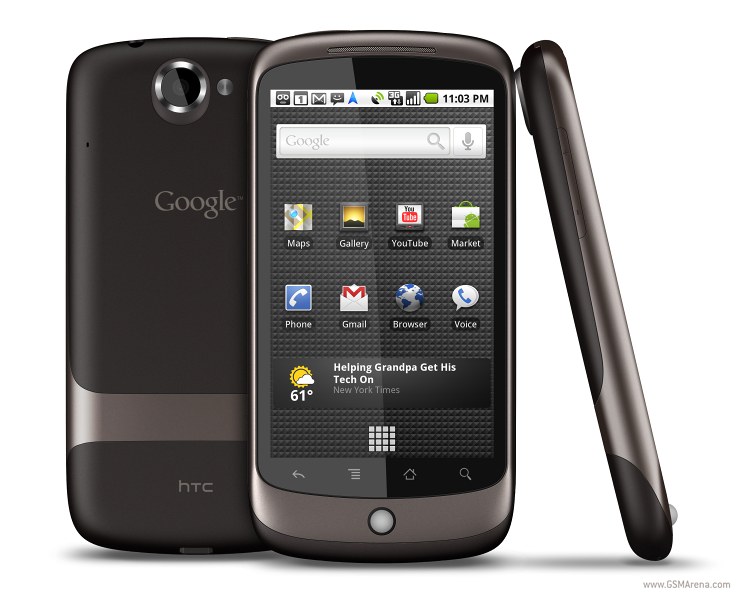
    Google Nexus One now available, yet again, for Android devs only


    If you couldn't manage to get yourself a Google Nexus One and still want to give it a try, today might be your lucky day. You only need to be a registered Android developer and to have some 529 US dollars in the piggy bank.
    As you might have heard, a little while ago Google stopped selling its first own Android-running device online so from that moment on your only option for becoming an owner of the HTC-made Google Nexus One were Google's partners (operators and retailers).


    HTC Google Nexus One HTC Google Nexus One HTC Google Nexus One HTC Google Nexus One
    Official photos of HTC Google Nexus One

    But if there aren't any of those in your neighborhood, you can now go for another option: as of yesterday the Google Nexus One can be purchased from the Android Developers website since the Nexus One has just become the new Android Developer Phones (replacing the elderly ADP 2).
    In order to take advantage of that new option, though, you have to be a registered Android developer. If you happen to be one, just log into your Android Developer account and follow the "Development Phones" link. By the way, the Android Developers' Nexus Ones come with the Android 2.1 on board but the ver. 2.2 update is just a few taps away.
    The phones sold over there are factory unlocked (and probably rooted) and are priced at 529 US dollars (around 400 euro, so, no news here). 

    Source

    Apple to set up Japan Web warning on problem iPods


    TOKYO (AP) -- After prodding from the Japanese government, Apple Inc. will post prominent notices on its website warning some iPod Nano music players in Japan may overheat.
    Sixty-one cases of batteries overheating have been reported in first-generation iPod Nano machines sold in 2005 and 2006, according to Japan's Ministry of Economy, Trade and Industry.
    Some units were warped by the heat that caused minor burns when people touched them, but no serious injuries or damage have been reported, it said.
    A notice for a battery replacement was posted late last year on Apple Japan's website but it requires several clicks before it can be read.
    The government, in talks with Apple Japan since last year, pressed the company to correct that, ministry official Seiji Shimagami said Friday.
    Apple spokesman Tom Neumayr said an easily accessible web page will be set up by early next week that outlines how to get a battery replacement.
    Apple will also send e-mails to registered owners, he said in a telephone interview from California. "Safety is the highest priority for Apple," said Neumayr.
    Japanese are among the world's biggest fans of Apple products, standing in long lines to snatch up iPhone models and the iPad as soon as they go on sale.
    The ministry said 1.8 million first-generation iPod Nano players have been sold in Japan, but it is unclear how many of those have the problem battery.
    Neumayr declined to comment on whether Nano players in other parts of the world may be affected by the same problem.
    Last month, Apple Chief Executive Steve Jobs offered free protective cases to buyers of the iPhone 4 to prevent reception problems that occur when people cover a certain spot on the phone with a bare hand.

    Google confirms acquisition of 'Superpoke' maker Slide

    Google on Friday officially announced it has acquired Slide Inc., confirming rumors circulating earlier in the week. Slide creates entertainment products that tie in with social networks and online communities such as SuperPoke! and its family of related games, Top Fish, and FunSpace.
    "For Google, the Web is about people, and we're working to develop open, transparent and interesting (and fun!) ways to allow our users to take full advantage of how technology can bring them closer to friends and family and provide useful information just for them," David Glazer, Engineering Director at Google said Friday.
    Though no specific product plans have been announced, Glazer said Slide's team will help make Google's services like Gmail, Docs, Blogger, Picasa, and YouTube more "socially aware."
    Slide founder Max Levchin today said "Given our shared vision and values, this is a tremendous opportunity for the two companies to come together to change the way people socialize on the Web."
    Financial terms of the acquisition were not discussed by either party.

    Samsung Galaxy S lands in two more countries, Brazil and China


    Samsung Galaxy S made it to Brazil and it seems that along the way it has picked up a strange appendix pointing from its top. Yup, it's a digital TV antenna. Unlike the other Galaxy S versions spread around the globe, the Brazilian Galaxy S comes with ISDB-Tb Digital TV on board. Oh, and it's pretty overpriced.

    As for the rest of the features, you should be familiar with them since those are common for the Brazilian and the non-Brazilian Galaxy S variants. So, you'll find the same gorgeous 4-inch Super AMOLED touchscreen of WVGA resolution as well as the 5MP autofocus camera on the back which is capable of shooting HD videos (720p@30fps).
    Samsung Galaxy S Brazil Samsung Galaxy S Brazil
    Samsung Galaxy S Brazil Samsung Galaxy S Brazil
    Live images of the Brazilian version of Samsung Galaxy S
    To refresh your memory, the Galaxy S is powered by a fast 1GHz processor and packs an impressive 1500mAh battery. At its launch the Brazilian version will run Android 2.1 (a.k.a. Eclair) but an official Froyo update should follow up pretty soon.
    The only downside of the Brazilian Samsung Galaxy S is its price. The SIM-free handset is said to cost good 2400 Brazilian reais (around 1036 euro). Hopefully, the Brazilian operators will offer a better subsidized price at the launch of the phone (some time in September).
    Samsung Galaxy S Brazil
    Samsung I9008 Galaxy S
    By the way, China will apparently get the Galaxy S as well (versions for both China Mobile and China Telecom are expected). The one on the picture above is called Samsung I9008 Galaxy S and should become available at the China Mobile stores soon.
    Thanks for the tip, Hugo.
    Source